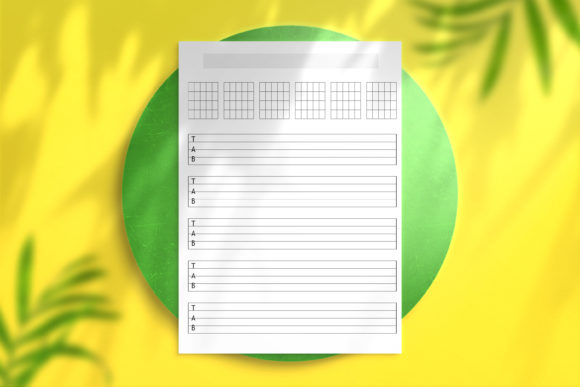
Mastering Music Paper Guitar Tablature with Chord Symbols: A Complete Guide to Sizes and KDP Publishing
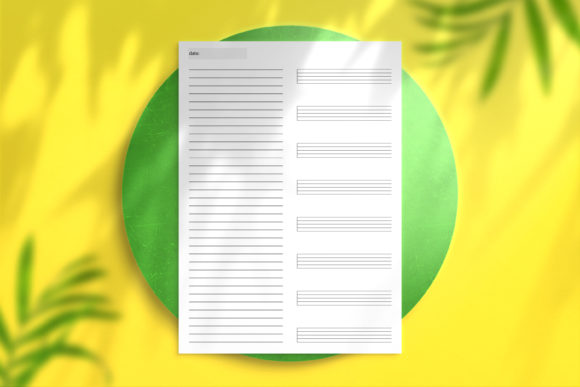
For guitarists, songwriters, and music educators, the blank page is both a canvas and a challenge. While standard manuscript paper serves pianists and orchestral composers well, guitarists require a specialized format that bridges the gap between rhythmic notation and fretboard visualization. This is where Music Paper Guitar Tablature with Chord Symbols becomes an indispensable tool. Unlike generic staff paper, this specialized template integrates six-line tablature directly beneath standard musical notation, topped with dedicated space for chord symbols and lyrics.
Understanding the nuances of this specific paper format is crucial not only for personal practice and composition but also for creators looking to publish low-content books via platforms like Amazon KDP. Whether you are a student trying to transcribe a solo, a teacher creating lesson plans, or an entrepreneur designing a niche notebook, grasping the technical specifications and practical applications of these templates will elevate your work. This guide explores the purpose, significance, and technical details of guitar tab paper across Letter, Half Letter, A4, and A5 sizes, ensuring you select or create the perfect resource for your needs.
The Anatomy of Specialized Guitar Manuscript Paper
To fully appreciate the utility of Music Paper Guitar Tablature with chord symbols, one must first understand why standard notation falls short for modern guitarists. Traditional sheet music communicates pitch and rhythm perfectly but lacks immediate fingering information. Tablature (TAB) solves the fingering issue but often obscures rhythm. By combining both on a single page with chord symbols above, musicians get a holistic view of the music.
The inclusion of chord symbols is the defining feature of this specific product category. In many generic tab notebooks, the space above the staff is left blank or reserved solely for lyrics. However, dedicated chord symbol spacing allows for harmonic analysis alongside melodic transcription. This is vital for jazz students analyzing standards, pop songwriters mapping out progressions, and fingerstyle arrangers who need to visualize the bass movement relative to the melody. The visual hierarchy—chords on top, standard notation in the middle, and tablature on the bottom—mirrors how a guitarist processes information cognitively while playing.
Why Size Matters: Choosing the Right Format
One of the most common misunderstandings among beginners and new publishers is assuming that "paper size" is merely a printing preference. In reality, the dimensions of music paper dictate its functional use case. The availability of this specific tab paper in Letter (8.5×11 in), Half Letter, A4, and A5 addresses distinct workflows in education, performance, and publishing.
- Letter Size (8.5×11 in): This is the industry standard in North America and the primary format for KDP publishing. Its large surface area allows for wider measure spacing, making it ideal for complex arrangements with high note density. For publishers, the 100-page Letter version is optimized for trade paperback distribution, offering ample room for full-song transcriptions without excessive page turns.
- A4 Size: Slightly taller and narrower than Letter, A4 is the international standard. Musicians in Europe, Asia, and South America prefer this size for compatibility with local binders and printers. If you are targeting a global audience or studying abroad, A4 ensures your materials integrate seamlessly with existing organizational systems.
- Half Letter (5.5×8.5 in): Often overlooked, this size is exactly half of a standard Letter sheet. It is gaining massive popularity in the KDP community for "travel-sized" composition notebooks. It offers enough width for legible tablature while being compact enough to fit in a gig bag or backpack. This size strikes a balance between portability and readability.
- A5 Size: The ultimate portable option. At roughly 5.8×8.3 inches, A5 tab paper is designed for quick idea capture, lyric writing, and sketching riffs on the go. While the measures are shorter, requiring more frequent line breaks, its convenience makes it a favorite for touring musicians and daily journaling.
Practical Applications in Modern Music Life
The relevance of physical music paper persists despite the proliferation of digital notation software like Sibelius or Guitar Pro. There is a tactile cognitive benefit to handwriting music that reinforces memory and understanding. When a student physically writes a chord symbol and its corresponding tab, they engage motor skills that deepen theoretical comprehension. This makes Music Paper Guitar Tablature with chord symbols a staple in music education.
In professional settings, this paper serves as a rapid prototyping tool. Songwriters often find that staring at a glowing screen stifles creativity. A physical notebook removes digital distractions, allowing for a direct flow from mind to hand. Furthermore, for session musicians, having a personalized library of handwritten charts in a specific size (like A5) allows for quick reference during rehearsals where tablets might be prohibited or impractical.
Navigating KDP Publishing Requirements
For creators interested in selling these resources, understanding the technical deliverables is essential. The product files mentioned—including single-page masters and 100-page ready-to-upload PDFs—are designed to streamline the self-publishing process. Amazon KDP has strict margin and bleed requirements that vary by trim size.
A common pitfall for new authors is using a generic PDF that hasn't been formatted for a specific trim size. A file designed for Letter size will fail validation if uploaded to an A4 project. The provision of separate, pre-formatted files for Letter, Half Letter, A4, and A5 eliminates this friction. Specifically, the 100-page Letter Ready KDP upload file typically includes proper gutter margins to ensure that the inner content isn't swallowed by the binding. This attention to technical detail distinguishes a professional product from an amateur one.
Additionally, the "Color Black" specification refers to standard black-and-white interior printing. This is the most cost-effective option for music manuscripts, keeping the retail price accessible for students and hobbyists. High-contrast black lines on cream or white paper remain the gold standard for readability under stage lights or in dim practice rooms.
Clarifying Common Misunderstandings
When selecting or creating guitar tab paper, several assumptions can lead to frustration. Addressing these ensures better outcomes for both users and publishers.
- "All Tab Paper Includes Chord Space": False. Many budget options only provide the six TAB lines and standard staff. Always verify that the product explicitly states "with chord symbols" if you intend to write harmony above the staff. Without this designated space, chord names will collide with lyric lines or measure numbers.
- "Digital Replaces Physical Entirely": While software is superior for playback and sharing, physical paper remains superior for learning and ideation. They are complementary tools, not mutually exclusive ones. Successful musicians often use both.
- "Size is Interchangeable": Scaling a PDF from Letter to A5 digitally often results in unreadably small notation. True A5 or Half Letter templates are redesigned with appropriate spacing for their dimensions, not merely shrunk versions of larger pages.
- "More Lines Per Page is Better": Not necessarily. Dense spacing looks efficient but becomes unusable when adding fingerings, slides, bends, and dynamic markings. Quality tab paper prioritizes whitespace for annotations over cramming maximum measures onto a page.
Building a Broader Understanding of Music Documentation
Ultimately, Music Paper Guitar Tablature with Chord Symbols represents more than just stationery; it is a structured framework for musical thought. Whether you are utilizing a single printable page for a classroom assignment or publishing a 100-page volume for commercial sale, the goal remains the same: facilitating the clear communication of musical ideas.
By respecting the differences between international and domestic paper sizes, acknowledging the unique needs of guitar notation versus general music, and adhering to publishing standards, users can maximize the effectiveness of these tools. For the educator, it means clearer lesson materials. For the artist, it means capturing inspiration without friction. And for the publisher, it means delivering a product that genuinely serves the guitar community. In an era of endless digital noise, the focused, intentional act of writing music on properly formatted paper remains a profound and practical pursuit.