Integrating Korean Grid Paper PDF Files into Creative and Publishing Workflows
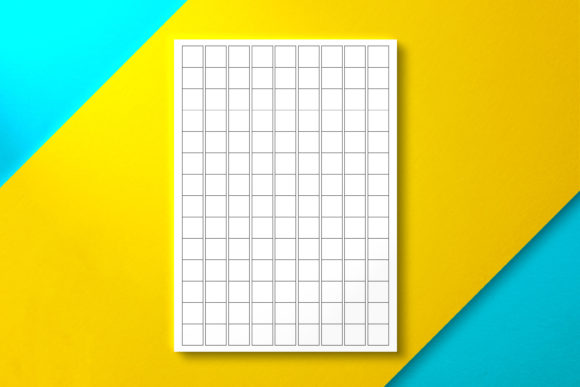
Korean grid paper, often referred to as Nopo-ji or Bangsul-ji, serves a distinct functional purpose that differs significantly from standard Western graph paper. While traditional grid paper is designed primarily for mathematical plotting or engineering schematics, Korean grid paper is optimized for language acquisition, calligraphy practice, and structured handwriting improvement. For professionals, educators, and self-publishers, accessing high-quality Korean Grid Paper in PDF format is not merely about finding a printable template; it is about securing a foundational asset for low-content book publishing, educational resource creation, and personal productivity systems.
The utility of these digital assets extends across multiple phases of a project lifecycle. Whether you are preparing a manuscript for Amazon KDP, designing classroom handouts, or organizing a personal study routine, the specific dimensions and page counts of your PDF files dictate the efficiency of your workflow. Understanding how to leverage single-page masters versus pre-formatted 110-page manuscripts ensures that your final output meets both technical printing standards and user expectations.
Selecting the Correct Format for Your Objective
The first step in effectively using Korean Grid Paper PDFs is matching the file specification to the intended end-use. There is no universal size; rather, each dimension serves a specific niche within the publishing and education ecosystem.
Standard Letter Size (8.5 x 11 inches)
The 1-page Korean Grid Letter and the 110-page Korean Grid Letter files are the industry standards for North American markets. The single-page version acts as a master template. Designers and educators use this file to create custom worksheets, test papers, or hybrid journals where grid pages alternate with lined or blank pages. The 110-page Letter variant, however, is a production-ready asset. It is specifically formatted for commercial KDP upload, accounting for necessary bleed and gutter margins. This size is ideal for comprehensive workbooks, adult handwriting practice books, and detailed language learning journals where ample writing space is required.
A4 and A5 International Standards
For creators targeting global audiences or users who prefer ISO standard sizes, the 1-page Korean Grid A4 and A5 files are essential. A4 is the default for educational materials in Europe, Asia, and Oceania. Using an A4 PDF ensures that when a user prints the file at home or when a printer produces a physical copy internationally, no content is cropped or scaled incorrectly. The A5 format bridges the gap between textbook and notebook. It is frequently used for portable vocabulary builders, travel journals, and compact study guides. When integrating A5 grids into a larger project, ensure your layout software is set to A5 document settings before importing the PDF to maintain crisp vector lines.
6x9 Inch Compact Formats
The 1-page Korean Grid 6x9 in and the 110-page Korean Grid 6x9 in files cater to the growing demand for portable, trade-sized notebooks. In the context of KDP and commercial publishing, 6x9 is arguably the most versatile trim size for low-content books. It offers a professional feel similar to mass-market paperbacks while providing enough surface area for practicing Hangul characters. The pre-formatted 110-page 6x9 file eliminates the guesswork regarding spine width and margin safety zones, allowing publishers to move directly from asset selection to cover design and upload.
Workflow Integration for Publishers and Creators
For entrepreneurs and marketers utilizing these assets for commercial products, the PDF files function as the core interior block of a larger manufacturing process. Efficiency here comes from understanding file hierarchy and platform compatibility.
Pre-Production Validation: Before uploading any 110-page manuscript to KDP or other print-on-demand services, verify the PDF properties. Commercial-ready files should have embedded fonts (or be entirely vector-based), correct color profiles (usually grayscale or black and white for interiors), and proper metadata. Even if a file is labeled "Ready Commercial Use," running it through a pre-flight check in Adobe Acrobat or the KDP Previewer prevents costly rejection delays.
Hybrid Interior Creation: Rarely does a successful product consist solely of grid paper. Most high-value workbooks integrate Korean Grid Paper PDFs with other elements. Use the 1-page master files to build custom sections. For example, a language learning book might sequence content as follows: introduction page, vocabulary list, 1-page Korean Grid Letter for copying words, and a reflection page. By treating the single-page PDF as a modular component rather than a static document, you can create unique value propositions that distinguish your product from generic competitors.
Cover Design Alignment: The trim size of your chosen grid paper dictates your cover specifications. If you select the 110-page Korean Grid 6x9 in file, your cover must be calculated precisely for that page count and paper type (white vs. cream). Mismatched interior and cover specs are the most common cause of publishing errors. Always finalize your interior PDF selection before beginning cover design to avoid rework.
Educational and Personal Implementation Strategies
Beyond commercial publishing, Korean Grid Paper PDFs play a critical role in learning workflows and personal organization. Educators, tutors, and self-directed learners utilize these files to create structured environments for skill acquisition.
Curriculum Development: Teachers can use the 1-page A4 or Letter masters to scaffold lessons. Instead of asking students to write on unstructured paper, providing a grid helps with character proportion and spacing consistency. Digital integration is also seamless; these PDFs can be imported into tablet note-taking apps like GoodNotes or Notability. This allows students to practice digitally with the same structural guidance as physical paper, supporting hybrid learning models.
Personal Practice Routines: For adults learning Korean or refining their penmanship, consistency is key. Printing a batch of 1-page Korean Grid A5 sheets creates a dedicated practice pad. Unlike bound notebooks, loose sheets allow users to isolate specific practice sessions, date them, and store only the best examples. This modular approach supports deliberate practice methodologies where feedback and iteration are prioritized over volume.
Digital Planning Integration: Productivity-minded users often incorporate Korean grids into digital planners. The grid structure provides visual anchors for habit tracking, mood logging, or creative brainstorming. Because the PDF format preserves line weight and clarity at any zoom level, it remains superior to rasterized images when used in digital planning ecosystems.
Quality Control and Technical Considerations
To maximize the longevity and usability of Korean Grid Paper PDFs, attention to technical detail is necessary during both the selection and application phases.
- Line Weight and Opacity: Ensure the grid lines are light enough to serve as guides without overpowering handwritten content. High-quality PDFs use precise stroke weights (typically 0.25pt to 0.5pt) and gray tones rather than pure black lines. This distinction is vital for both digital viewing and physical printing.
- Margin Safety: For commercial files, verify that the grid pattern respects the gutter margin. On a 110-page book, the inner margin must be wider than the outer margin to account for binding. A grid that runs too close to the spine renders the inner squares unusable for writing.
- Paper Type Compatibility: If printing physically, consider how the grid density interacts with paper weight. Standard 20lb copy paper may show bleed-through with heavy ink markers on dense grids. For premium workbook creation, selecting files with slightly wider cell spacing can accommodate various writing instruments and paper stocks.
- File Organization: Maintain a structured asset library. Rename files descriptively upon download (e.g., "Korean_Grid_6x9_110pg_KDP_Ready.pdf") rather than keeping generic filenames. This reduces friction when managing multiple projects or versions across different trim sizes.
Strategic Asset Management
Treating Korean Grid Paper PDFs as strategic assets rather than disposable templates changes how they contribute to long-term goals. For publishers, this means maintaining a library of validated, pre-flighted interiors that can be rapidly deployed for seasonal trends or new niche tests. For educators, it means building a reusable repository of standardized practice sheets that ensure consistency across semesters. For individuals, it means establishing a reliable system for skill development that removes the friction of setup and allows focus to remain on execution.
The versatility of having Letter, A4, A5, and 6x9 options available in both single-page and bulk formats ensures that the tool adapts to the user's evolving needs. Whether the goal is launching a best-selling workbook, teaching a class of beginners, or mastering a new script personally, the right PDF specification forms the invisible infrastructure that makes the process smooth, professional, and effective. By prioritizing format accuracy, workflow integration, and quality control, users transform simple grid paper into a powerful engine for productivity and creation.