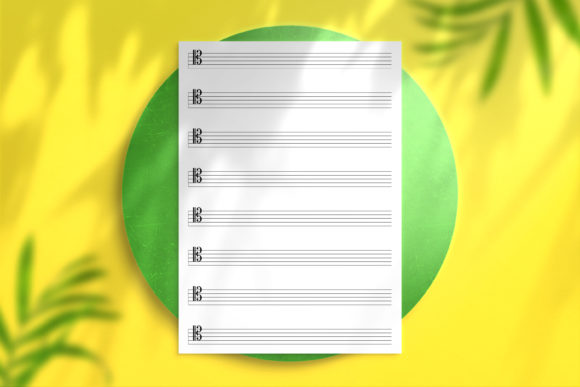
Evaluating Music Paper Staff Tenor Clef Resources
Selecting the appropriate manuscript paper is a foundational step for musicians, composers, and educators working within specific vocal or instrumental ranges. While treble and bass clef papers are ubiquitous, resources dedicated to the tenor clef serve a distinct niche. When evaluating a product bundle described as Music Paper Staff Tenor Clef, specifically one offering multiple formats like Letter, Half Letter, A4, A5, and KDP-ready files, it is essential to understand how these specifications align with practical musical needs. This evaluation focuses on determining whether such a comprehensive digital package offers genuine utility for composition, transcription, education, or self-publishing ventures.
Understanding the Tenor Clef Niche
The tenor clef is a C-clef positioned on the fourth line of the staff, indicating that middle C sits on that specific line. It is primarily utilized by instruments with a mid-to-low range to avoid excessive ledger lines when reading higher passages. Common users include cellists, bassoonists, trombonists, and euphonium players, as well as tenors in choral arrangements. Unlike standard treble or bass clef paper, tenor clef manuscript is rarely available in pre-printed physical notebooks at general music stores. Consequently, digital PDF resources fill a significant gap in the market.
When researching Music Paper Staff Tenor Clef products, buyers are typically looking for accuracy in spacing and line weight. A poorly generated staff where the C-clef is misaligned or the line spacing is inconsistent can hinder readability and professional presentation. Therefore, the primary criterion for evaluation must be the typographical quality of the staff itself, ensuring it meets standard engraving conventions before considering secondary features like page size variety.
Evaluating Format Versatility and Page Sizes
The availability of multiple page sizes—Letter (8.5x11 in), Half Letter, A4, and A5—addresses different use cases. Understanding which size serves your specific workflow is crucial for maximizing the value of the purchase.
- Letter (8.5x11 in) and A4: These are the industry standards for orchestral scores, academic submissions, and formal compositions. Letter size is dominant in North America, while A4 is the international standard. Having both ensures compatibility regardless of geographic location or institutional requirements. These sizes provide ample horizontal space for complex rhythms and vertical space for dynamic markings and articulations.
- Half Letter (5.5x8.5 in): This size is increasingly popular for portable practice journals, sketchbooks, and personal songwriting. It fits easily into instrument cases and bags. For tenor clef users, who often need to transcribe excerpts quickly during rehearsals, this compact format offers convenience without sacrificing too much writable area.
- A5 (5.8x8.3 in): Similar to Half Letter but following ISO standards, A5 is ideal for European users or those utilizing standardized planner systems. It strikes a balance between portability and usability, making it suitable for field notes or quick melodic dictation.
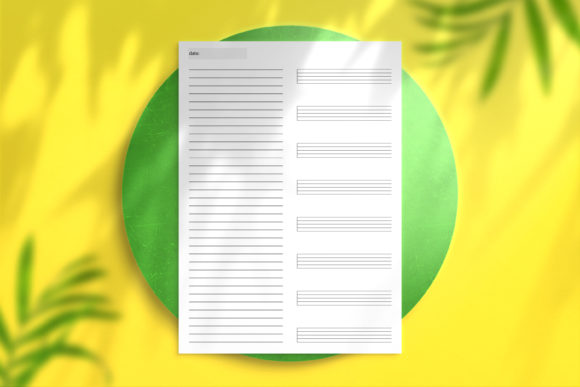
When comparing products, verify that the margins are appropriate for each size. A common issue with multi-size bundles is that the staff width remains static while margins change, potentially resulting in cramped writing space on smaller formats or excessive whitespace on larger ones. High-quality Music Paper Staff Tenor Clef files should adjust the number of staves per page proportionally to the paper dimensions.
Assessing Commercial Use and KDP Readiness
A significant differentiator for this type of product is the inclusion of "100 pages Music Paper Staff Tenor Clef Letter Ready Commercial Use" and "Ready KDP upload." This indicates the file is formatted not just for personal printing, but for creating sellable low-content books on platforms like Amazon Kindle Direct Publishing. Evaluating this feature requires a business-oriented mindset rather than a purely musical one.
For creators intending to publish tenor clef journals or workbooks, the technical specifications are non-negotiable. The PDF must have correct bleed settings if the design extends to the edge, precise trim sizes, and an appropriate gutter margin to prevent content from disappearing into the book binding. A 100-page file suggests a pre-assembled interior, which saves hours of repetitive formatting. However, buyers must scrutinize the licensing terms. "Commercial use" can vary; some licenses allow unlimited sales, while others cap units or prohibit modification. Ensuring the license aligns with your publishing volume and customization needs is a critical decision factor.
Furthermore, consider the saturation of the niche. Tenor clef is specialized. While competition is lower than for treble clef paper, the audience is also smaller. Using a pre-made KDP-ready file reduces upfront effort, allowing creators to test market demand with minimal investment. If the goal is to create a unique educational resource rather than a generic notebook, evaluate whether the provided template allows for adding custom headers, instructional text, or branding elements.
Tradeoffs: Digital Bundles vs. Specialized Alternatives
While a comprehensive PDF bundle offers flexibility, it is important to weigh the tradeoffs against alternative solutions. Digital files require access to a printer and ink, which adds ongoing costs. For musicians who write daily, a professionally printed, spiral-bound notebook may ultimately be more economical and convenient despite the higher initial price and limited size options.
Additionally, notation software like Sibelius, Dorico, or MuseScore has largely replaced hand-written manuscript for professional engraving. If the primary goal is producing performance-ready scores, learning software is a better long-term investment than blank paper. However, Music Paper Staff Tenor Clef remains superior for ideation, ear training, classroom exercises, and situations where technology is impractical or prohibited. The decision hinges on whether the user needs a tool for creative capture and learning versus final production.
Another consideration is the specificity of the clef placement. Some tenor clef papers place the clef slightly differently depending on historical convention or instrument preference (e.g., cello vs. trombone). A generic template may not perfectly match a specific pedagogical tradition. Users with strict institutional requirements should print a test page and compare it against their preferred reference materials before committing to bulk printing or publishing.
Making the Final Selection
Determining whether a Music Paper Staff Tenor Clef product is the right fit involves matching the product’s attributes to your immediate and long-term objectives. If you are an educator needing varied handouts for different class activities, the multi-size PDF bundle provides necessary adaptability. If you are a KDP publisher targeting instrumental pedagogy, the commercial-ready 100-page file offers a viable entry point into a specialized market. Conversely, if you require archival-quality paper for a thesis or a durable notebook for touring, seeking physical alternatives or customizable professional printing services may be more appropriate.
Ultimately, the value of these resources lies in their ability to remove friction from the musical process. By providing accurate, accessible, and versatile tenor clef templates, they support the specific needs of mid-range instrumentalists and vocalists who are often underserved by standard stationery. Careful evaluation of print quality, licensing terms, and format suitability ensures that the selected resource effectively supports your musical or commercial endeavors without unnecessary compromise.