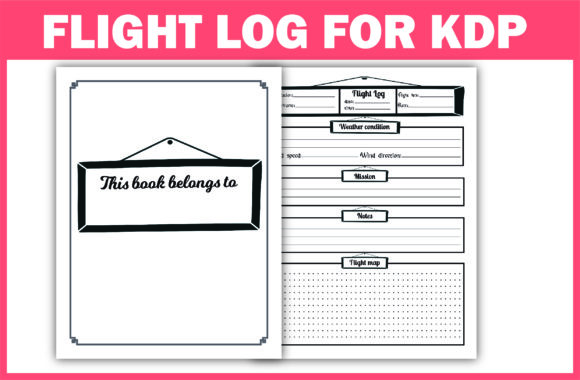
Flight Drone Log Book Ready for KDP: A Practical Asset for Low Content Publishers
Launching a successful low or no-content publishing business on Amazon requires more than just uploading generic notebooks. It demands niche-specific utility and professional formatting that meets platform standards without requiring hours of design work. The Flight Drone Log Book Ready for KDP serves as a turnkey solution for publishers targeting the rapidly growing drone enthusiast and commercial pilot market. This digital asset package eliminates the technical guesswork of book creation, providing a pre-formatted interior that adheres strictly to Kindle Direct Publishing guidelines. By utilizing this resource, creators can bypass the steep learning curve of layout design and focus entirely on keyword research, cover creation, and marketing strategy.
Streamlining the Technical Setup for New Publishers
One of the most common friction points for new KDP entrepreneurs is formatting errors. Margins that are too narrow, bleed issues, or incorrect trim sizes can lead to rejected uploads or poor customer reviews. This specific logbook addresses those pain points immediately. The included PDF is formatted specifically for an 8.5 x 11-inch trim size, which is the industry standard for functional logbooks that need ample writing space. With 120 pages containing 100 individual flight logs, the pagination is already calculated to account for front matter and blank end pages, ensuring the spine width calculation is accurate when you order your proof copy.
Beyond the print-ready PDF, the inclusion of editable PPT and JPG files offers flexibility that static templates cannot match. If you identify a sub-niche within the drone community—such as agricultural surveying or real estate photography—you can modify the headers or add specific data fields using the PowerPoint source file before generating a new PDF. This adaptability transforms a single purchase into multiple potential product variations, allowing you to test different market segments without hiring a graphic designer or learning complex vector software.
Why Drone Pilots Need Specialized Logging Tools
To sell this logbook effectively, it helps to understand why the end-user actually needs it. While many pilots use apps, physical logbooks remain essential for several practical reasons. Battery life on mobile devices is a finite resource during field operations; a paper log does not require charging. Furthermore, in professional settings like construction site inspections or search and rescue operations, a physical record provides a tangible chain of custody and maintenance history that digital files sometimes cannot replicate due to corruption or sync errors.
This specific interior is designed with these operational realities in mind. The 100-flight capacity strikes a balance between portability and longevity. A book that is too thick becomes cumbersome to carry in a drone backpack, while one that is too thin requires frequent replacement. The 8.5 x 11 dimension allows for detailed entry fields, accommodating complex data points such as GPS coordinates, wind speed, battery voltage, payload weight, and post-flight maintenance notes. When you market this book, you are not selling paper; you are selling compliance, organization, and peace of mind to operators who face regulatory scrutiny.
Real-World Applications Across Different User Segments
The versatility of the Flight Drone Log Book Ready for KDP extends across various demographics, each with distinct motivations for purchasing a physical tracker. Understanding these segments helps in crafting targeted ad copy and backend keywords.
Commercial Operators and Freelancers
For Part 107 certified pilots in the United States, or equivalent licensed operators globally, maintaining accurate records is often tied to insurance validity and client billing. A freelancer doing roof inspections needs to log flight times to justify invoice line items. This logbook provides a professional structure for tracking billable hours versus non-billable setup time. Publishers can target this group by emphasizing the "professional grade" layout and the inclusion of maintenance tracking sections, which are crucial for equipment depreciation schedules and warranty claims.
Educational Institutions and Training Programs
Drone education is expanding into high schools, vocational colleges, and university engineering programs. Instructors require standardized methods for students to document their progress and flight hours toward certification. This pre-formatted interior saves educators from creating their own tracking sheets. The consistent 100-log format allows for easy grading and progress monitoring. Publishers focusing on the academic niche might bundle this logbook with study guides or create classroom packs, leveraging the editable PPT file to add school logos or specific curriculum checkpoints to the interior pages.
Hobbyists and Competitive Racers
While less regulated, serious hobbyists and FPV (First Person View) racers are obsessive about data. They track battery cycles to predict failure points and adjust tuning parameters based on environmental conditions. For this audience, the logbook serves as a performance diary. The large 8.5 x 11 size is particularly beneficial here, as racers often sketch course layouts or tape in small telemetry screenshots. Marketing to this group involves highlighting the spacious layout and the ability to customize pages for specific racing leagues or freestyle metrics.
Strategic Considerations Before Publishing
Having a high-quality interior is only half the battle. Before uploading the Flight Drone Log Book Ready for KDP, publishers must consider how to differentiate their listing in a competitive marketplace. Since other sellers may have access to similar assets, your value proposition lies in presentation and positioning.
- Cover Design Alignment: Ensure your cover art reflects the specific user intent suggested by the interior. If the interior includes detailed maintenance fields, a technical, industrial cover design will convert better than a whimsical illustration. The JPG files included in the package can serve as inspiration or base layers for your cover, ensuring visual consistency between the exterior and interior.
- Keyword Specificity: Avoid broad terms like "drone notebook." Instead, utilize long-tail keywords derived from the logbook’s actual fields. Terms like "UAV maintenance tracker," "Part 107 flight recorder," or "FPV battery cycle log" attract buyers who know exactly what they need. Review the column headers in the provided PDF to extract semantic keywords that accurately describe the content.
- A+ Content Utilization: Because customers cannot physically flip through the book, use the JPG files to create A+ Content modules. Show close-ups of the logging fields so buyers can verify the layout suits their specific drone model or regulatory requirements. Transparency reduces return rates and negative reviews regarding "unexpected formatting."
- Bundle Potential: Consider how this logbook fits into a larger ecosystem. Can it be paired with a drone pre-flight checklist? A photography composition guide? The editable nature of the PPT file allows you to create complementary products quickly, increasing the average order value through series linking.
Maximizing the Value of Included Assets
The true ROI of this package comes from leveraging every component strategically. The PDF is your production master, but the PPT and JPG files are your marketing and iteration tools. Do not ignore the source files. Even if you do not plan to alter the interior immediately, having them archived means you can respond to market feedback instantly. If reviews indicate that users want a section for "Propeller Replacement Dates," you can update the master file and republish within days.
Furthermore, the 100-flight count is a significant selling point that should be highlighted in your book description. Many competitors offer 50 or 60 logs at similar price points. Emphasizing the superior page-to-price ratio appeals to value-conscious consumers. The 8.5 x 11 size also distinguishes the product from smaller A5 or 6x9 journals that lack sufficient space for comprehensive data entry. By clearly communicating these specifications and connecting them to user benefits—like reduced frequency of repurchase and better data granularity—you position the Flight Drone Log Book Ready for KDP as a premium tool rather than a generic commodity.
Ultimately, success in low-content publishing relies on solving specific problems efficiently. This logbook asset removes the barrier of entry for serving the drone community, allowing publishers to deliver a professionally tested, regulation-aware product. Whether targeting commercial inspectors, student pilots, or weekend enthusiasts, the combination of correct formatting, adequate capacity, and editable flexibility provides a solid foundation for a sustainable publishing portfolio.