Designing Effective Kids Alphabets Handwriting Tracing Pages for Early Literacy Development
The transition from recognizing letters to physically forming them represents a significant cognitive and motor milestone in early childhood education. For educators, parents, and content creators developing educational materials, the quality of Kids Alphabets Handwriting Tracing Pages directly influences how effectively a child builds foundational writing skills. These resources are not merely repetitive exercises; they serve as the critical bridge between visual letter recognition and the neuromuscular coordination required for legible handwriting. Understanding the technical specifications and pedagogical structure of these pages is essential for anyone involved in producing or selecting high-quality learning tools for toddlers.
Cognitive and Motor Skill Integration in Tracing Activities
Handwriting is a complex task that requires the synchronization of visual perception, fine motor control, and spatial awareness. When utilizing tracing pages, the primary objective extends beyond simple replication. The activity reinforces neural pathways associated with letter formation while simultaneously developing the pincer grasp and hand-eye coordination necessary for future academic tasks. High-quality tracing materials must account for the developmental stage of toddlers, who are often still refining their proprioception—the sense of where their hands are in space relative to the paper.
Effective tracing pages provide appropriate scaffolding. This means offering enough visual guidance to prevent frustration but requiring enough independent effort to promote muscle memory. The progression typically moves from straight lines and curves to individual uppercase letters, followed by lowercase variations. This sequence mirrors the natural development of motor control, as large, capital letters are generally easier for young children to form than their smaller, more intricate lowercase counterparts. Resources designed with this hierarchy in mind ensure that learners build confidence before tackling more complex formations.
Technical Specifications for Professional Print Quality
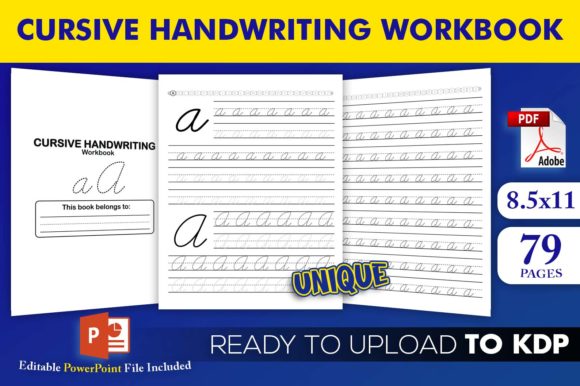
For creators and self-publishers entering the educational niche, adhering to precise technical standards is non-negotiable. Physical comfort and visual clarity are paramount for toddlers, which dictates specific formatting requirements for any professional Handwriting Practice Book. The industry standard dimension of 8.5×11 inches provides ample surface area for large-scale tracing, accommodating the broader, less refined movements characteristic of early learners. This size also ensures compatibility with standard home printers and commercial binding services, making it accessible for both classroom use and at-home practice.
Resolution plays a critical role in the usability of these materials. Low-resolution graphics result in pixelated or fuzzy guidelines, which can confuse young eyes and lead to improper letter formation. High-resolution interiors ensure that dotted lines are crisp and distinct, providing a clear path for the pencil. Furthermore, the specification of "NO bleed" is a deliberate design choice for this demographic. Bleed refers to printing that extends to the very edge of the paper, requiring trimming during production. By keeping all content within safe margins, creators ensure that no part of the tracing guide is accidentally cut off during binding or printing, preserving the integrity of the learning experience on every single page.
Optimizing Page Count and Content Density
A 52-page structure offers a balanced approach to curriculum design. This length is substantial enough to cover the entire alphabet with multiple repetition opportunities per letter, yet concise enough to maintain a toddler’s engagement without causing fatigue. In early childhood education, attention spans are limited, and a book that feels endless can become discouraging. A 52-page format allows for:
- Dedicated Letter Focus: Allocating two pages per letter (one for uppercase, one for lowercase) ensures comprehensive coverage.
- Review Sections: Space for mixed practice or assessment at the end of sections.
- Warm-up Exercises: Initial pages dedicated to line tracing and shape formation before introducing alphabetic characters.
- Certificate of Completion: A final page to celebrate achievement, reinforcing positive associations with learning.
This pagination strategy supports spaced repetition, a proven learning technique where information is reviewed at increasing intervals. Rather than cramming all variations of a letter onto a single sheet, spreading content across a 52-page volume allows for digestible, focused practice sessions.
File Format Versatility: PDF vs. PPT for Educators and Creators
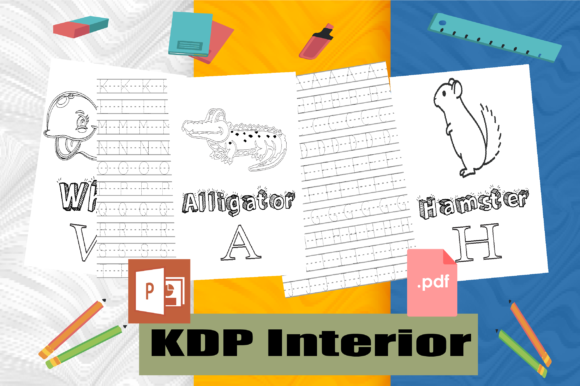
The availability of source files in both PDF and PPT formats addresses the diverse needs of modern educators and entrepreneurs. While PDF is the universal standard for printing and distribution, the inclusion of editable PPT files unlocks significant utility for customization and adaptation.
The Role of PDF in Consistency
Portable Document Format (PDF) files preserve the exact layout, fonts, and spacing intended by the designer. For parents and teachers who simply need a ready-to-use resource, the PDF ensures that the Kids Alphabets Handwriting Tracing Pages appear exactly as designed, regardless of the device or printer used. This consistency is vital for maintaining uniform line heights and stroke widths, which are crucial for developing consistent handwriting habits. PDFs also prevent accidental alterations that could compromise the educational value of the material.
Leveraging PPT for Customization and Localization
PowerPoint (PPT) files serve a different, equally important function. They allow users to modify elements, rearrange layouts, or adapt content for specific learning environments. An educator working with bilingual students might add translations or culturally relevant imagery alongside the English alphabet. A therapist might adjust the spacing of guidelines to accommodate a student with specific motor challenges. For business owners and KDP publishers, PPT files enable the creation of derivative works or series expansions without starting from scratch. This flexibility transforms a static product into a dynamic platform for personalized education.
It is important to note that cover fonts are frequently excluded from interior templates due to licensing restrictions. Users customizing these files must secure appropriate commercial licenses for any typography added to covers or modified interior elements. Understanding font licensing is a critical aspect of professional content creation, ensuring that educational products remain compliant and legally sound.
Pedagogical Considerations for Alphabet Instruction
Beyond technical specs, the efficacy of handwriting practice books depends heavily on instructional design. Not all tracing pages are created equal; the most effective ones incorporate evidence-based strategies for literacy acquisition. Visual cues, such as directional arrows and numbered strokes, are essential components. Toddlers do not intuitively know that an 'A' starts at the top; without explicit guidance, they may develop inefficient stroke patterns that hinder writing speed and legibility later in life.
Furthermore, integrating multisensory elements enhances retention. While a physical book is primarily visual and tactile, the best designs encourage verbal reinforcement. Including space for coloring or associating letters with familiar objects (e.g., "A is for Apple") engages multiple areas of the brain. This contextual learning helps anchor abstract symbols to concrete concepts, making the tracing activity more meaningful than rote mechanical reproduction.
Addressing Diverse Learning Needs
Inclusive design is increasingly important in educational publishing. Standard tracing pages should be evaluated for accessibility. High contrast between the dotted lines and the background is necessary for children with visual processing differences. Adequate white space reduces cognitive load, preventing the page from appearing cluttered or overwhelming. For left-handed learners, considerations regarding binding placement and image orientation can prevent smudging and awkward wrist positioning. Creators who anticipate these variables produce resources that serve a broader audience and demonstrate genuine expertise in child development.
Practical Implementation in Home and Classroom Settings
The real-world application of these materials varies significantly depending on the environment. In a home setting, parents often use tracing books as structured bonding activities or quiet-time occupation. Here, the durability of the paper and the clarity of instructions matter most. Parents benefit from brief introductory notes explaining proper pencil grip and posture, turning the book into a guided teaching tool rather than just a workbook.
In classroom or therapy settings, these pages often serve as assessment tools and intervention aids. Teachers may laminate specific pages for reusable dry-erase practice, extending the lifespan of the resource. Occupational therapists might use the tracing pages to evaluate fine motor maturity, observing how a child approaches the task to identify underlying developmental delays. The standardized nature of a professionally designed 52-page book provides a consistent baseline for tracking progress over time.
For digital entrepreneurs and print-on-demand sellers, understanding these use cases informs marketing and product description accuracy. Highlighting the "NO bleed" specification reassures buyers about print safety, while emphasizing the dual file formats appeals to both end-users and fellow creators. Authentic expertise is demonstrated not by hyperbolic claims, but by accurately describing how the product's features solve specific problems in early literacy education.
Evaluating Quality in Handwriting Resources
When selecting or creating Kids Alphabets Handwriting Tracing Pages, stakeholders should prioritize pedagogical soundness over aesthetic novelty. While colorful illustrations attract attention, the core functionality lies in the precision of the guidelines and the logical progression of skills. A beautiful book with poorly constructed letter models can inadvertently teach bad habits that are difficult to unlearn. Conversely, a minimalist, technically accurate resource may yield superior long-term results.
Ultimately, the value of a handwriting practice book is measured by its ability to facilitate independent success. The combination of high-resolution printing standards, appropriate physical dimensions, versatile file formats, and developmentally aligned content creates a robust foundation for early writers. Whether used by a parent at the kitchen table, a teacher in a preschool classroom, or a creator building an educational brand, adherence to these principles ensures that the resource serves its fundamental purpose: empowering children to communicate through the written word.